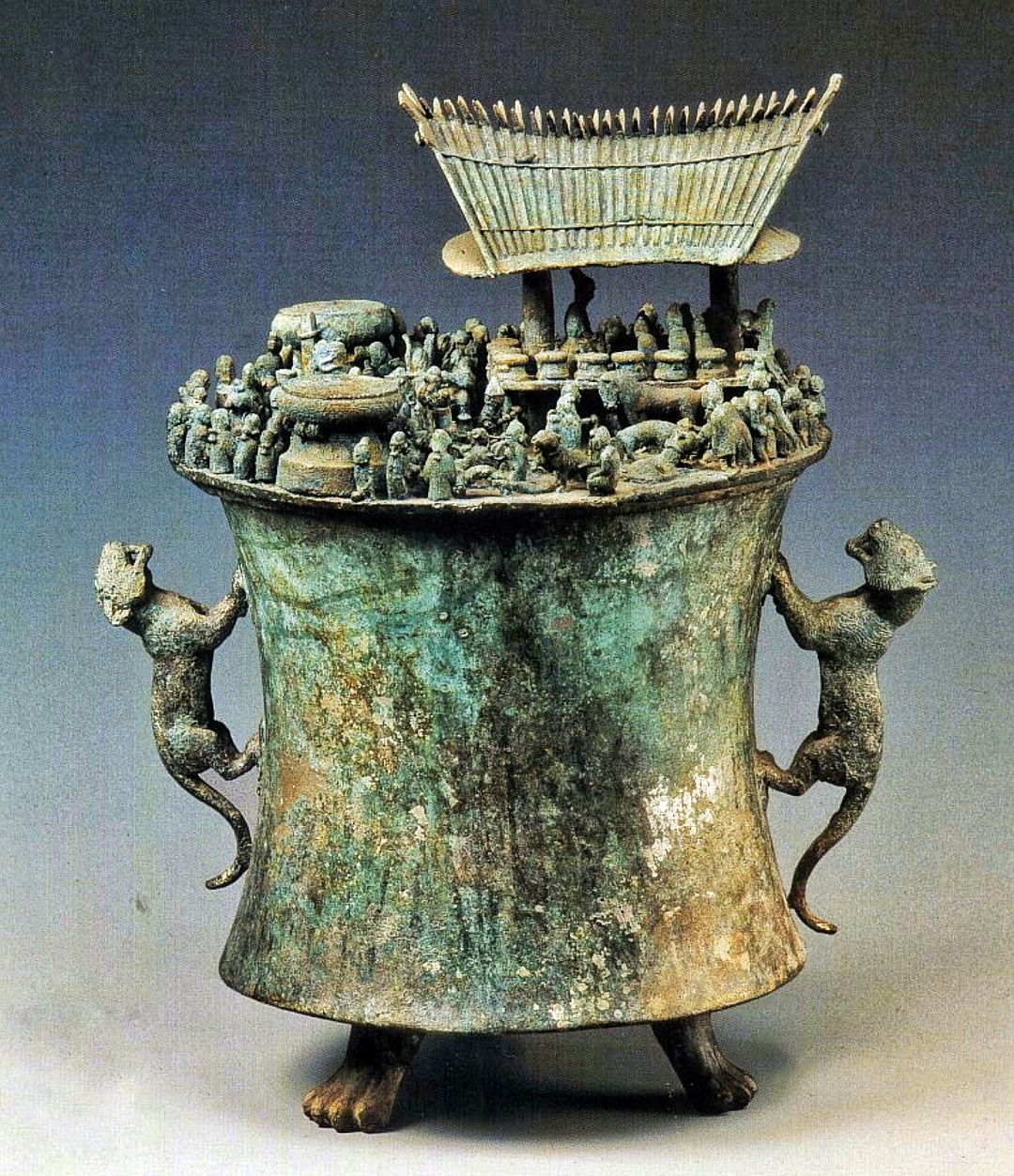
There is an ancient wealth artifact that wealthy nobles used to attract fortune, sitting in the National Museum of China in Beijing, and most people have never heard of it.. It is not Egyptian. It is not Greek or Roman. It comes from a kingdom so obscure that historians spent centuries debating whether it ever existed. Yet for the nobles who owned it, this object was the single most powerful statement a person could make about their wealth, their status, and their connection to the forces that controlled fortune itself.
It is called the Bronze Cowrie Container of the Dian Kingdom, and it was the wealth magnet of the ancient world.
The Kingdom Nobody Knew About
From roughly the 4th century BC to 109 BC, a sophisticated civilization flourished along the shores of Dianchi Lake in what is now Yunnan Province, in the far southwestern corner of China. These people were called the Dian, and they built a complex, stratified society with skilled metalworkers, trained armies, elaborate religious ceremonies, and a system of trade that reached well beyond their borders.
They left behind no written records. Everything known about the Dian comes from what archaeologists found buried with their dead. And what they found, beginning with major excavations in the 1950s at sites called Shizhaishan and Lijiashan, was extraordinary. Over 10,000 bronze objects were pulled from the ground, including weapons, drums, ritual vessels, decorative buckles, figurines, and one category of object that stood apart from all the rest.
The Bronze Cowrie Container.
What the Container Was
The Dian Kingdom was located far from the sea. Cowrie shells, the small oval marine shells with smooth porcelain-like surfaces, had to be imported from distant coastal regions at considerable cost and effort. Because of this scarcity, cowrie shells functioned as the primary currency of the Dian people. They were as valuable to the Dian as gold and silver were to other civilizations.
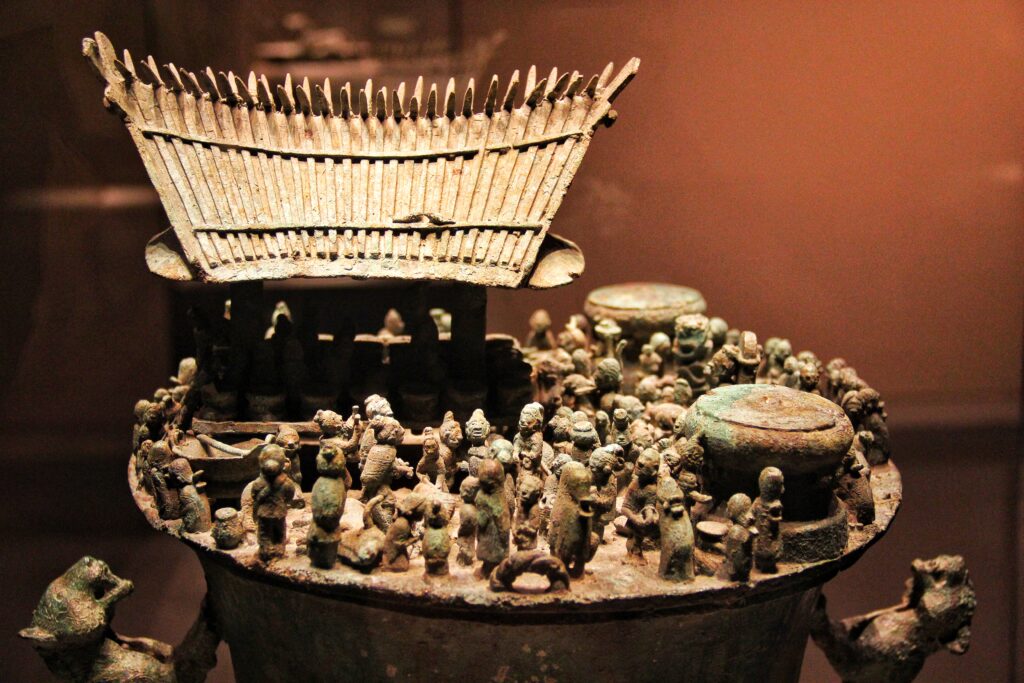
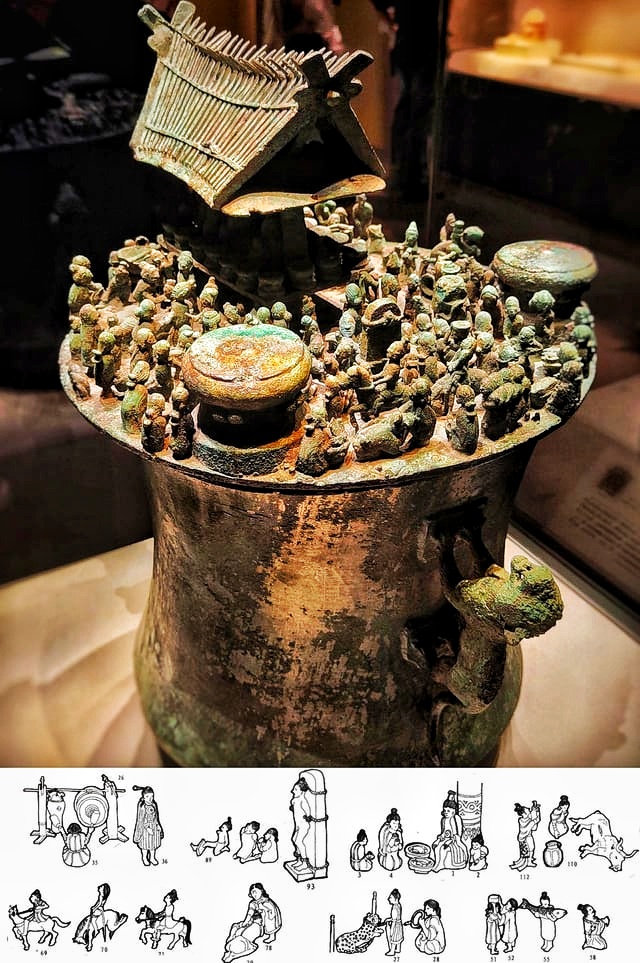
When a noble family accumulated enough cowrie shells, they did not simply pile them in a corner. They commissioned a bronze container specifically built to hold them. These containers were cylindrical bronze vessels, and they were anything but plain. Each one was covered in elaborate decorations. The lids were topped with miniature bronze sculptures depicting scenes from Dian life, including hunting, farming, weaving, ritual ceremonies, tribute payments, sacrifices, and battle. Some lids carried dozens of individual figures. The most famous surviving example, now housed at the National Museum of China, has a lid 32 centimeters in diameter adorned with 129 separate bronze figures and features stilted buildings, drums, columns, cauldrons, and animals.
Tigers, oxen, and cattle appeared frequently in the designs. Cattle were a direct symbol of agricultural wealth in Dian society. The tiger represented power, protection, and authority. Having both animals on the container was a deliberate statement.
Why It Was More Than Storage
The cowrie container was not simply a box to keep money safe. According to Fan Haitao, deputy director of the Yunnan Provincial Museum, these objects were unique to the Dian people and found nowhere else in the ancient world. They functioned simultaneously as currency storage, status symbol, ritual object, and ancestral connection.
When the Dian noble placed cowrie shells inside this container and sealed it with a sculpted bronze lid, the act carried religious weight. The containers were used in ancestral ceremonies, placed on ritual altars, and buried with their owners in tombs alongside other prestige goods. Owning a large, ornate cowrie container meant the community could see exactly how much wealth you had accumulated, and it meant your ancestors could see it too.
The wealth was not hidden. It was displayed.
The container communicated several things at once. First, that the owner had accumulated enough currency to need a vessel this size. Second, that the owner had the resources to commission a skilled bronze craftsman to make something this intricate. Third, that the owner was connected enough to the spiritual world to use the object properly in ritual. All three together created something that functioned like a magnet, because in Dian society, visible wealth and ritual legitimacy attracted more wealth, more alliances, more tribute, and more political influence.
The Craftsmanship Behind the Object
Making a cowrie container required mastery of several bronze casting techniques including solid casting, lost-wax casting, and the use of multiple molds to produce the detailed figurines on the lids. The Dian bronze tradition is considered one of four major bronze cultures of the ancient world, alongside the Greek bronze culture, Central China bronze culture, and the North China prairie culture.
What distinguished Dian bronzeware from Chinese bronzeware of the same period was its realism. While bronze objects from the Central Plains of China typically featured abstract, symbolic patterns, Dian bronzeware depicted actual scenes from life in vivid, lifelike detail. The figures on the cowrie container lids are so specific and accurate in their depictions that researchers have used them to reconstruct Dian hairstyles, clothing, architecture, agricultural practices, religious ceremonies, and military tactics.
The cattle figures that appear on so many containers were not decorative choices. Cattle were the most visible measure of a family’s material prosperity in an agricultural society. Putting seven bronze oxen on your wealth container was the ancient equivalent of listing your assets publicly.
Buried With the Rich
When Dian nobles died, their cowrie containers went into the ground with them. Archaeologists excavating the tombs at Shizhaishan found containers buried alongside weapons, gold ornaments, bronze drums, and other prestige goods. The containers in the richest tombs were the largest and most elaborately decorated. The containers in lesser tombs were plainer and smaller.
This burial pattern confirmed what the objects themselves suggested. The cowrie container was a direct measure of social rank. A man buried with a large, multi-figured container was communicating to the afterlife what he had communicated to the living world during his lifetime. His wealth was real, his status was legitimate, and he had honored his ancestors properly.
One group of three containers excavated from a single tomb at Tianzimiao Temple held 600 cowrie shells between them when they were opened. The lids were decorated with cattle figures and scenes of armed soldiers, a combination that symbolized both material prosperity and military strength.
A Kingdom That Kept Its Secrets
The Dian Kingdom was conquered by the Han Emperor Wu in 109 BC. After that, the Dian culture was gradually absorbed into the Han empire and its distinct material traditions faded. The cowrie containers stopped being made. The kingdom itself was so thoroughly absorbed that for many centuries, historians questioned whether it had ever existed at all.
It was not until the excavations of the 1950s that the physical evidence confirmed what a brief reference in the historical text of the Han historian Sima Qian had suggested. The Dian had been real, their society had been sophisticated, and their bronze objects represented one of the most remarkable artistic and metallurgical traditions of the ancient world.
The cowrie containers, which once sat on the altars of the wealthiest families in southwestern China and later accompanied them into their tombs, now rest in museums. The National Museum of China in Beijing holds the most important surviving examples. The Yunnan Provincial Museum in Kunming holds many others.
Why This Artifact Still Matters
The Bronze Cowrie Container of the Dian Kingdom represents something that appears across nearly every ancient civilization but rarely in such a direct, material form. The belief that the right object, properly made, properly used, and properly displayed, could concentrate wealth and attract more of it.
For the Dian nobility, this was not superstition. It was social architecture. The container held real currency, demonstrated real skill, performed real ritual functions, and produced real social effects by signaling to allies, subordinates, trading partners, and rivals exactly what kind of person they were dealing with.
Two thousand years later, the object survives. The kingdom that made it is gone. But the cowrie container, sitting behind museum glass with its 129 bronze figures still intact on the lid, is still doing what it was built to do. Telling anyone who looks at it exactly how much it represented, and how seriously the people who owned it took the business of wealth.