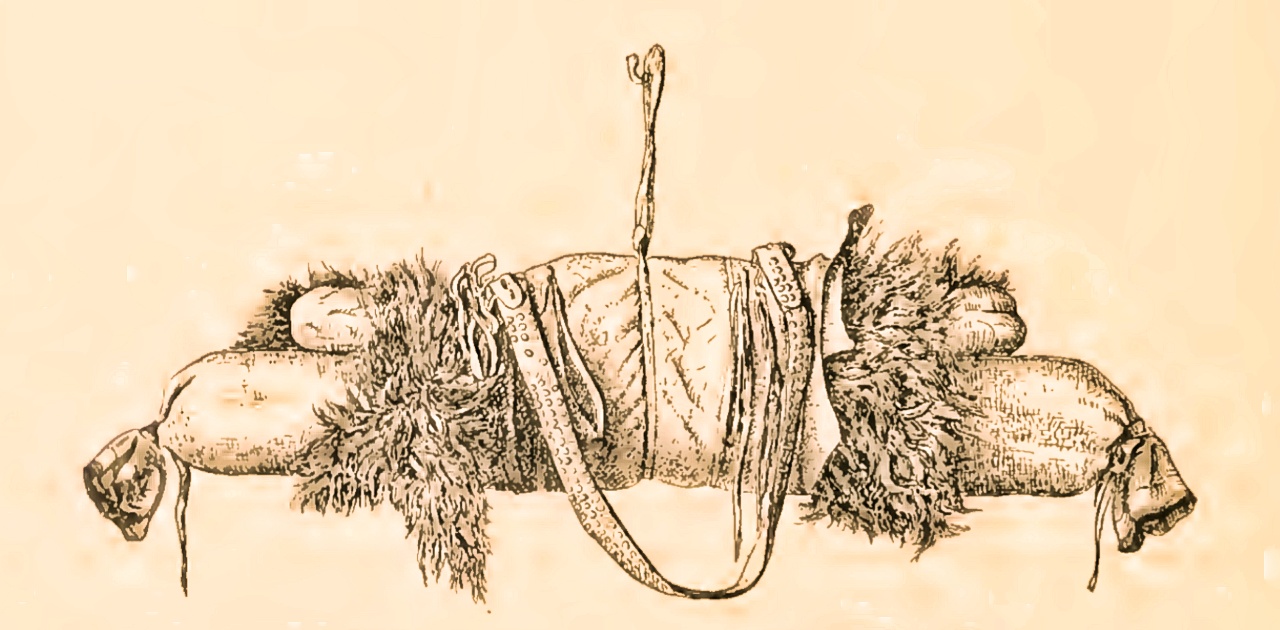
The Blackfoot Medicine Bundle is a wrapped collection of sacred objects assembled and maintained by members of the Blackfoot Confederacy, medicine bundles have no standardized size, as each bundle varies according to its type, origin, and accumulated contents. Documented examples range from small personal bundles held in wrappings of approximately 30 centimeters by 30 centimeters to large ceremonial bundles exceeding 90 centimeters in length when wrapped. Contents recorded by ethnologist Clark Wissler during fieldwork conducted between 1902 and 1905 for the American Museum of Natural History include animal skins of muskrat, mink, otter, squirrel, and owl, a sacred pipe, a wooden bowl, rattles, rawhide bags containing red ochre paint, pine needle incense, and tobacco, with specific contents varying by bundle type.
No single discovery date exists, as medicine bundles are living ceremonial objects continuously maintained and transferred within communities rather than static artifacts recovered from an archaeological context. The Blackfoot Confederacy, known collectively as Niitsitapi meaning the real people, comprises four nations: the Siksika (Northern Blackfoot), the Kainai (Blood), the Apatohsipiikani (South Piegan) in Alberta, and the Ammskaapipiikani (Blackfeet Nation) in Montana, with a combined population of approximately 45,000 members across North America. Their traditional territory extended from the North Saskatchewan River in present-day Alberta south to the Yellowstone River in Montana, and from the Rocky Mountains east to the Alberta-Saskatchewan border. Wissler’s comprehensive study, Ceremonial Bundles of the Blackfoot Indians, was published in 1912 as Volume 7, Part 2 of the Anthropological Papers of the American Museum of Natural History and remains the foundational scholarly reference on the subject. Following decades of institutional holding, the Glenbow Museum in Calgary repatriated over 250 sacred bundles to Blackfoot communities between 1990 and 2001 under what became Canada’s first and only dedicated repatriation legislation, the First Nations Sacred Ceremonial Objects Repatriation Act, passed by the Alberta Legislature in 2000.
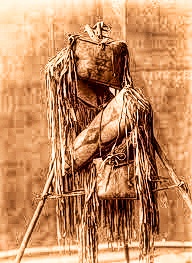
Blackfoot Medicine Bundle Material and Craftsmanship
A medicine bundle is not a single crafted object but an assembled collection whose physical form reflects its ceremonial history, accumulated transfers, and the specific powers it embodies. The outer wrapping, typically buffalo hide in historic examples and tanned animal hide in more recent ones, encloses the contents and constitutes the bundle’s physical boundary. The wrapping is tied or bound with sinew cord. No standardized interior arrangement governs all bundles; the contents are specific to each bundle’s type and origin narrative.
The most documented bundle type, the Beaver Bundle, contains skins representing a wide range of animals associated with the beaver’s world including waterfowl, fish, and semi-aquatic mammals. Each skin is prepared and folded in a prescribed manner, with associated songs and protocols governing how each element is handled. The Medicine Pipe Bundle centers on a sacred pipe, with the pipestem wrapped separately from the pipe bowl, both enclosed alongside the skins of animals received through the originating vision. The Natoas Bundle, associated with the Sun Dance ceremony, contains objects specific to the holy woman who vows to sponsor the Okan. Personal bundles, by contrast, could be considerably smaller, containing a single object or a small number of items received in a vision and wrapped in folded hide.
Materials within bundles reflect direct access to the Plains and foothill environment of Blackfoot territory. Buffalo hide, elk skin, beaver pelt, otter fur, eagle feathers, hawk feathers, dried plants used as incense and medicine, and small stone objects called buffalo rocks or iiniiskim were commonly documented elements. Red ochre, a powdered iron oxide mineral, appeared in most bundle types as a painting material for ceremonial use. Tobacco appeared in pipe bundles as the substance offered during prayer. None of these materials were carved, cast, or fired in the sense of craft production; the objects were selected, treated, and assembled according to protocols transmitted through ceremony and oral instruction rather than through material fabrication in the conventional sense.
Form and Features
The external appearance of a medicine bundle gives little indication of its contents or significance. When wrapped and bound, a bundle presents as a roughly oblong hide package, sometimes decorated with painted designs, attached feathers, or beadwork on the outer surface. The visual distinction between bundle types is not easily apparent from the exterior to those outside the tradition. The bundle’s identity, power, and protocols are understood through the oral knowledge carried by its keeper rather than communicated through the object’s visual form.
When opened ceremonially, the interior reveals the arrangement of its contents in a sequence governed by the opening songs. Each item is removed in a specific order, handled in prescribed ways, and placed in designated positions within the ceremonial space. The order of opening and the handling protocols encode the bundle’s origin narrative and the obligations of its keeper. Bundles accumulate additional items over time through subsequent visions and transfers, meaning older bundles may contain more diverse material than newer ones.
The iiniiskim, or buffalo rock, deserves particular note as one of the more individually documented bundle components. These naturally occurring fossils, most commonly ammonite or other spiral-shaped stones found on the Plains, were recognized by Blackfoot people as living entities with the power to attract buffalo. A single iiniiskim could be kept in a small personal bundle or included within a larger ceremonial bundle. Their distinctiveness within the Plains material record has made them among the more frequently documented individual bundle components in ethnographic literature.
Function and Use
Medicine bundles operated as the primary interface between the human and spiritual dimensions of Blackfoot life. Within the Blackfoot worldview, the natural world is animated by spiritual powers whose assistance can be sought through proper ceremonial relationship. Bundles were the material form through which those relationships were maintained. To hold a bundle was to hold an ongoing obligation of care, ceremony, and conduct. Bundle keepers were expected to observe behavioral restrictions, conduct openings at prescribed times, and maintain the songs, prayers, and protocols attached to the bundle through its history of transfer.
The Beaver Bundle ceremony, documented by Wissler as the oldest and most foundational bundle ritual among the Blackfoot, involved multi-day openings during which each animal skin in the bundle was brought out with its associated songs. The ceremony held responsibility for tobacco planting and the renewal of relationships between the human community and the animal world. The Medicine Pipe Bundle was opened at the sound of the first thunder in spring, a ceremony observed across all four Blackfoot nations and continuing to the present day. The Natoas Bundle, held by the holy woman sponsoring the Sun Dance, was central to the annual Okan ceremony, the most significant communal religious gathering of the Blackfoot year.
Transfer ceremonies governed the movement of bundles between individuals and families. A bundle was not simply sold or inherited; its transfer required a formal multi-day ceremony in which the outgoing keeper transmitted all associated songs, protocols, and responsibilities to the new keeper. This transfer was a significant social and economic event involving substantial gifts from the acquiring family to the transferring family. The knowledge transferred alongside the bundle was considered as essential as the physical objects, meaning a bundle received without its accompanying ceremonial instruction was understood to be incomplete and potentially dangerous to its holder.
Personal bundles, received through dreams or visions, operated at the individual level, providing the keeper with specific protective or healing capacities during hunting, warfare, or illness. A warrior’s bundle might contain feathers and skins associated with speed and vision; a healer’s bundle might center on bear or eagle medicines associated with strength and sight.
Cultural Context
The Blackfoot have occupied the Northern Plains for at least one thousand years based on archaeological evidence, with oral traditions asserting presence since the time of creation. Their culture was organized around the seasonal movement of buffalo herds, whose migrations structured the annual cycle of hunting, ceremony, and social gathering. Horses, acquired by the Blackfoot from neighboring nations around 1730, transformed the scale and speed of buffalo hunting, contributing to the expansion of Blackfoot territory and power during the 18th century.
Medicine bundles sat at the center of this social structure. Bundle ownership conferred social prestige, political authority, and spiritual responsibility simultaneously. The most powerful bundle keepers held status comparable to political leaders, and in many cases the same individuals held both roles. The distribution of bundles across a community mapped the community’s ceremonial obligations, with different families holding responsibilities for different seasonal ceremonies. No single individual or family held all ceremonial authority; the bundle system distributed spiritual responsibility collectively.
The Blackfoot Confederacy maintained its territory through military strength and a network of alliances and trade relationships. Contact with European traders began incrementally from the late 17th century through Hudson’s Bay Company post records documenting Blood and Blackfoot peoples at York Factory from 1717 onward. The smallpox epidemics of 1837 to 1838 and 1869 to 1870 killed an estimated quarter of the Blackfoot population in each outbreak, severely disrupting social structures and ceremonial knowledge transmission. The near-total elimination of the buffalo herds by commercial hunting between 1870 and 1884, followed by the signing of Treaty 7 in 1877 and confinement to reserves, created conditions of starvation and forced dependency that led many families to sell or surrender bundles to traders, collectors, and ethnographers during the late 19th and early 20th centuries.
Federal assimilation policies in both Canada and the United States actively suppressed ceremonial practices during this period. Canada’s Indian Act of 1885 prohibited potlatches and other ceremonies, and while the Okan was not explicitly named, its associated bundle practices fell under general restrictions on indigenous religious observance enforced through the reserve agent system. These prohibitions remained in effect until 1951 in Canada, driving bundle ceremonies underground for two generations and creating gaps in the transmission of ceremonial knowledge that Blackfoot communities have worked to recover since the 1970s.
Discovery and Preservation
Clark Wissler conducted fieldwork among Blackfoot communities in Montana and Alberta between 1902 and 1905 as curator of anthropology at the American Museum of Natural History in New York. Working primarily among the Piegan and with interpreter David Duvall, Wissler documented bundle types, contents, opening protocols, transfer ceremonies, and origin narratives in a level of detail unmatched by any earlier observer. His 1912 publication, Ceremonial Bundles of the Blackfoot Indians, published as Anthropological Papers of the American Museum of Natural History, Volume 7, Part 2, catalogued the Beaver Bundle, Medicine Pipe Bundle, Natoas Bundle, and multiple personal bundle types with descriptions of contents and ceremonial contexts. The American Museum of Natural History acquired bundles and bundle components during this period that remain in its collection, accessible under NAGPRA consultation protocols.
The Glenbow Museum in Calgary accumulated one of the largest institutional holdings of Blackfoot ceremonial material through the collecting activities of Calgary businessman and lawyer Eric Harvie, who donated his collection to establish the Glenbow in the 1950s and 1960s. Large-scale protest from Blackfoot communities over the display of sacred bundles without consent began in the late 1980s, triggered in part by the Glenbow’s 1988 exhibition The Spirit Sings, which displayed indigenous sacred objects from multiple international collections and drew a boycott led by the Lubicon Lake Cree. Glenbow initiated a loan program in the mid-1990s allowing bundles to circulate between the museum and communities for ceremonial use, but the freezing of bundles as part of standard pest management protocol before their return to storage conflicted with Blackfoot understanding of the bundles as living entities requiring care consistent with their sacred status.
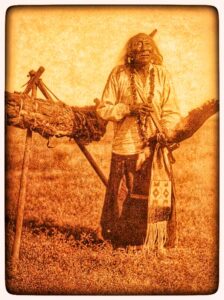
Under the leadership of CEO Robert Janes and Senior Curator of Ethnology Gerald Conaty, Glenbow pursued full repatriation through a decade of negotiation with Blackfoot communities and provincial government officials. When provincial cultural officials resisted, Janes brought the matter directly to the Premier of Alberta. The First Nations Sacred Ceremonial Objects Repatriation Act was passed in 2000, the only legislation of its kind in Canada, followed by the Blackfoot First Nations Sacred Ceremonial Objects Repatriation Regulation in 2004. Between 1990 and 2001, Glenbow returned over 250 sacred bundles to Siksika, Kainai, and Piikani communities. The Royal Alberta Museum in Edmonton holds additional Blackfoot material under the same legislative framework, with ongoing repatriation requests processed twice annually against deadlines of February 15 and September 1. American institutions holding Blackfoot material, including the American Museum of Natural History, operate under NAGPRA rather than FNSCORA, requiring Ammskaapipiikani (Blackfeet Nation) in Montana to lead repatriation requests for objects held in US collections.
Why It Matters
The Blackfoot medicine bundle stands as one of the most documented examples of a living ceremonial tradition in North American indigenous material culture, distinguished from most comparable objects by the fact that bundles remain in active ceremonial use within communities rather than existing solely as museum artifacts. The bundle system encoded an entire structure of social organization, spiritual obligation, and ecological relationship within the Northern Plains, making each bundle simultaneously a religious instrument, a record of social history, and a carrier of specialized ecological knowledge about the animals whose powers it embodies. The repatriation process between the Glenbow Museum and the Blackfoot Confederacy from 1990 to 2001 produced Canada’s first dedicated indigenous sacred objects repatriation legislation and stands as a precedent-setting case study in museum ethics, institutional transformation, and the relationship between legal ownership and cultural stewardship. The fundamental tension the process exposed, between the museum conservation imperative to preserve objects as stable physical artifacts and the Blackfoot understanding of bundles as living entities requiring ceremonial engagement to remain meaningful, continues to define the central philosophical debate in indigenous cultural heritage management internationally.
https://wikiflo.com/gallery-of-tapestries-galleria-degli-arazzi/
[…] Blackfoot Medicine Bundle: The Most Powerful Sacred Native Tradition […]